
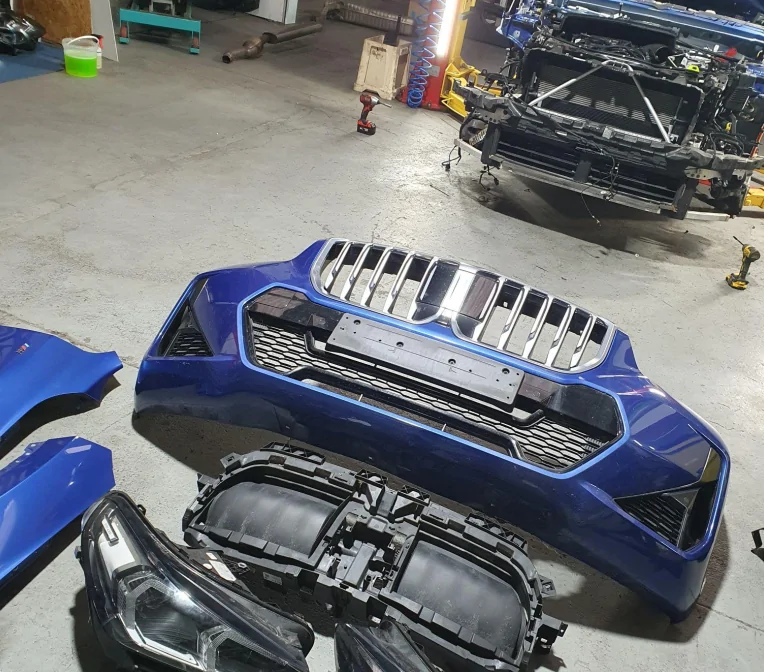
When a BMW needs a part, a headlight, a gearbox, a body panel after a minor bump, the price of buying new from a dealer is often the first shock. The second shock, for anyone who hasn’t used a BMW breakers yard before, is realising how much cheaper a used genuine part can be. The third shock, occasionally, is ordering from the wrong place and discovering that cheaper wasn’t actually the deal it looked like.
Finding BMW breakers near you isn’t difficult. Finding one that’s genuinely worth using takes a few more steps. Here’s how to tell the difference.
What a BMW Breakers Yard Actually Is
A BMW breakers yard (sometimes called a BMW dismantler or BMW salvage yard) is a specialist business that buys damaged, written-off, or end-of-life BMWs, dismantles them, and resells the usable parts. The key word is specialist: a yard that focuses on one brand, for example, BMW specifically, rather than every make that comes through the gate, tends to know the range well enough to match a part to your exact model, specification, and build date, which matters more with BMWs than with most other cars.
In the UK, all breaker yards must operate as Authorised Treatment Facilities (ATFs) under the End-of-Life Vehicles Regulations, meaning they’re licensed, inspected, and required to handle vehicles to an environmental standard before dismantling. That regulatory baseline matters when you’re deciding whether a yard is worth dealing with. A yard that’s vague about its licensing, or that doesn’t issue a Certificate of Destruction when it takes in a vehicle, isn’t operating to the standard the law requires.
The better operations work like this: a BMW arrives, it’s assessed, depolluted, and dismantled. Every part worth reselling is tested, photographed, and listed with the donor vehicle’s mileage and a real description of its condition. Then it goes on sale. That process, at a competent yard, takes the guesswork out of what you’re buying.
Why “Near Me” Is Only Part of the Answer
Searching “BMW breakers near me” is a smart starting point, but proximity alone doesn’t tell you much. A BMW breakers yard ten miles away might be excellent. One two miles away might have poor stock, no warranty policy, and no interest in answering specific questions about a part before you commit.
The more useful question is: which BMW breakers yard is worth ordering from? For most parts, that question doesn’t have a geographic constraint the way it once did. A specialist dismantler with reliable stock, documented condition, a 30-day warranty, and next-day delivery is often more useful than a local yard where you drive over, inspect something in a car park, and take it away unsupported.
That said, “near me” is still relevant for things you want to inspect in person, or collect to save shipping costs on a heavy item. The point is to use proximity as one factor, not the only one.
Proximity is a convenience. Licensing, BMW specialism, honest condition notes, and a clear warranty are what actually separate a reliable breakers yard from a risky one.
How to Tell If a BMW Breakers Yard Is Worth Using
A few things distinguish a well-run BMW breakers yard from one that’s just filling a listing with hopeful descriptions:
They’re licensed. A legitimate UK dismantler holds ATF status, an environmental permit or a waste management licence. You can check a yard’s ATF status on the Environment Agency’s public register. If a yard can’t tell you their permit number or gets evasive about it, that’s a reason to look elsewhere.
They specialise in BMW. A yard that only handles BMW, rather than everything from Fords to Audis, knows the range well enough to tell you whether a G20 3 Series gearbox is compatible with your F30, or whether a lighting assembly from a pre-LCI model will fit your post-LCI car. That knowledge is worth something.
They photograph their stock and document condition honestly. Stock images on listings are a red flag. Reputable dismantlers photograph the actual part, note the donor vehicle’s mileage, and describe the condition specifically, not “used, good.” You should be able to see what you’re buying before you buy it.
They offer a warranty. Most established BMW breaker yards offer a 30-day warranty on used parts. “Sold as seen” with no recourse is the norm at informal or lower-quality operations. A clear, stated warranty period tells you the yard is confident in what it’s selling.
They’ll answer specific questions. Ask whether the part matches your VIN, what the donor vehicle’s mileage is, and whether the part requires coding after fitting. A seller who answers those questions directly has the knowledge to supply the right part. One who avoids them or pushes you to decide fast is guessing.
Their reviews are independent. Check Google or other verified platforms, rather than the testimonials on the yard’s own website. Volume and recency both matter. A yard with a few hundred reviews from three years ago tells you less than one with thousands of current ones.
The UK’s Better BMW Breakers Yards Are Often Online-First
One of the changes in the trade over the past decade is that the best-stocked BMW dismantlers don’t necessarily have a walk-in yard that looks impressive from the road. Some of the most professional operations in the UK work primarily or exclusively online, with well-photographed stock, clear descriptions, and logistics partnerships that get a part to your door faster than a local yard could in many cases.
A good example is an MT Auto Parts business, which operates as a specialised BMW breakers yard. They specialise exclusively in used BMW parts for models produced from 2012 onwards, covering the F, G, and U generations, including the 1–8 Series, X1–X7 SUVs, Z4 roadster, and electric models such as the i3, i8, iX3, iX, and i7. They sell BMW parts in all categories you can imagine, offer 24 to 48 hours delivery in the UK mainland and offer a 30-day warranty on most spare parts (T&C apply).
The point isn’t that online-first is better than a local yard; it’s that confining your search to a map radius can mean overlooking well-run operations with deep stock and faster delivery than the nearest yard on your phone’s results page.
Questions Worth Asking Before You Order Anything
If you’re dealing with a local BMW breakers yard or one you found online, these questions or information should be found online or should be answered:
Can you confirm this part against my VIN? A yard that can, and does, is operating properly. One that only asks for model and year is asking you to take fitment on faith.
What’s the donor vehicle’s mileage? For any mechanical or electronic component, you want to know what kind of life it’s had. A gearbox from a 40,000-mile donor vehicle is a different proposition from one that came out of a 130,000-mile car.
Does this part need coding after fitting? Certain BMW components, ECUs, some lighting assemblies, and other coded modules don’t simply plug in. They require coding to the specific vehicle afterwards. A good parts supplier will tell you upfront.
What’s the return policy if it doesn’t fit? Fitment issues happen even when both sides have done their homework. A clear, workable return policy is as much a sign of quality as the part itself.
Summary
Finding a BMW breaker near you on Google is a good place to start, but distance shouldn’t be the only thing you consider. Look for a licensed breaker that specialises in BMWs, shows clear photos of its parts, offers a proper warranty and can answer your questions before you buy.
Check these five things before placing an order. You might find that a trusted supplier with fast UK-wide delivery is a better choice than the nearest scrapyard. What matters most is getting the right part, in the condition you expect, with support if something goes wrong.
Disclaimer: This article is for general information only. UK ATF licensing requirements, the End-of-Life Vehicles Regulations, and Authorised Treatment Facility rules may change. Check current requirements with the Environment Agency, SEPA, or NIEA. Part compatibility, warranty terms, and delivery timeframes vary by supplier, model, and specification.
